
Overview
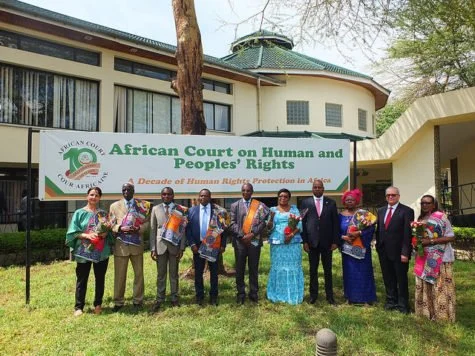
The African Court on Human and Peoples’ Rights is an international judicial body established by member states of the African Union to interpret and apply the African Charter on Human and Peoples’ Rights. Created to enhance the protection of human rights across the continent, the Court serves as a key institution for addressing violations and providing legal remedies. It works alongside the African Commission on Human and Peoples’ Rights, which is responsible for promoting and monitoring the implementation of the Charter. Through its decisions, the Court strengthens accountability, promotes justice, and ensures compliance with both the Charter and broader international human rights agreements and norms. In this committee, delegates will represent the justices and legal teams of both parties as they argue the case. The committee will follow a combination of court procedure and parliamentary procedure.
Topic 1: African Court on Human and People’s Rights
In Bob Chacha Wangwe and the Legal and Human Rights Centre v. Tanzania (2023), Bob Chacha Wangwe and the LHRC accused the government of Tanzania of violating political rights under national and international law. The applicants argued that the National Elections Act infringed upon the right to equality before the law and the right to participate freely in the government of one’s country. Wangwe alleged that the government violated fundamental rights guaranteed by the African Charter on Human and Peoples’ Rights, the Universal Declaration of Human Rights, the International Covenant on Civil and Political Rights, and the Constitution of the United Republic of Tanzania. In this important case about political participation and democratic principles, delegates must evaluate the merits of the applicants’ arguments and legal claims.