

Overview
Long have the bustling islands of Singapore served as the one of the most important ports of Southeast Asia, acting as a connector between East Asia and Oceania to Europe, Africa, and India, and an important social, cultural, and political hub. The Republic of Singapore has also recently gained its independence from Malaysia, however, and its destiny now lies in its own hands. However, not everything in Singapore's future looks bright, with most of the population living in overcrowded slums, a small, local, noncompetitive market, ethnic rioting, and a GDP per capita only around $400 USD. With this in mind, delegates must find creative solutions to Singapore’s urban detriments, from industrialization, the facilitation of global transport, the creation of a financial sector, or the alleviation of the population from poverty, leading the country to grasp its full potential.
Topic: Housing, Infrastructure, and Urban Renewal
At independence, nearly 400,000 Singaporeans lived in unsafe, overcrowded housing. The Housing and Development Board (HDB), established in 1960 and led by Lim Kim San, became the backbone of Singapore’s social stability. Within its first five years, it constructed more than 50,000 flats — an unprecedented effort in post-colonial Asia. (Housing and Development Board, History of Public Housing) Urban renewal, however, also brought displacement and tension: kampong clearances disrupted tight-knit communities and raised questions about equitable rehousing and racial integration. Delegates in this committee must confront the dual challenge of speed and social harmony — how to modernize housing, roads, and sanitation without fracturing the social fabric or deepening inequality.
Topic 2: Industrialization and Foreign Investment
Following separation, Singapore lost its access to the Malaysian common market, forcing it to industrialize rapidly to generate employment and exports. Guided by Dutch economist Dr. Albert Winsemius, the Economic Development Board (EDB) and Jurong Industrial Estate became key instruments in attracting multinational investors such as Royal Dutch Shell and Mitsubishi Corporation. (Economic Development Board, History of Singapore’s Industrialisation) Yet this strategy raised serious concerns about dependency, labor rights, and environmental impact. Should the new republic prioritize foreign capital and rapid growth, or safeguard local ownership and long-term sustainability?
The Dais
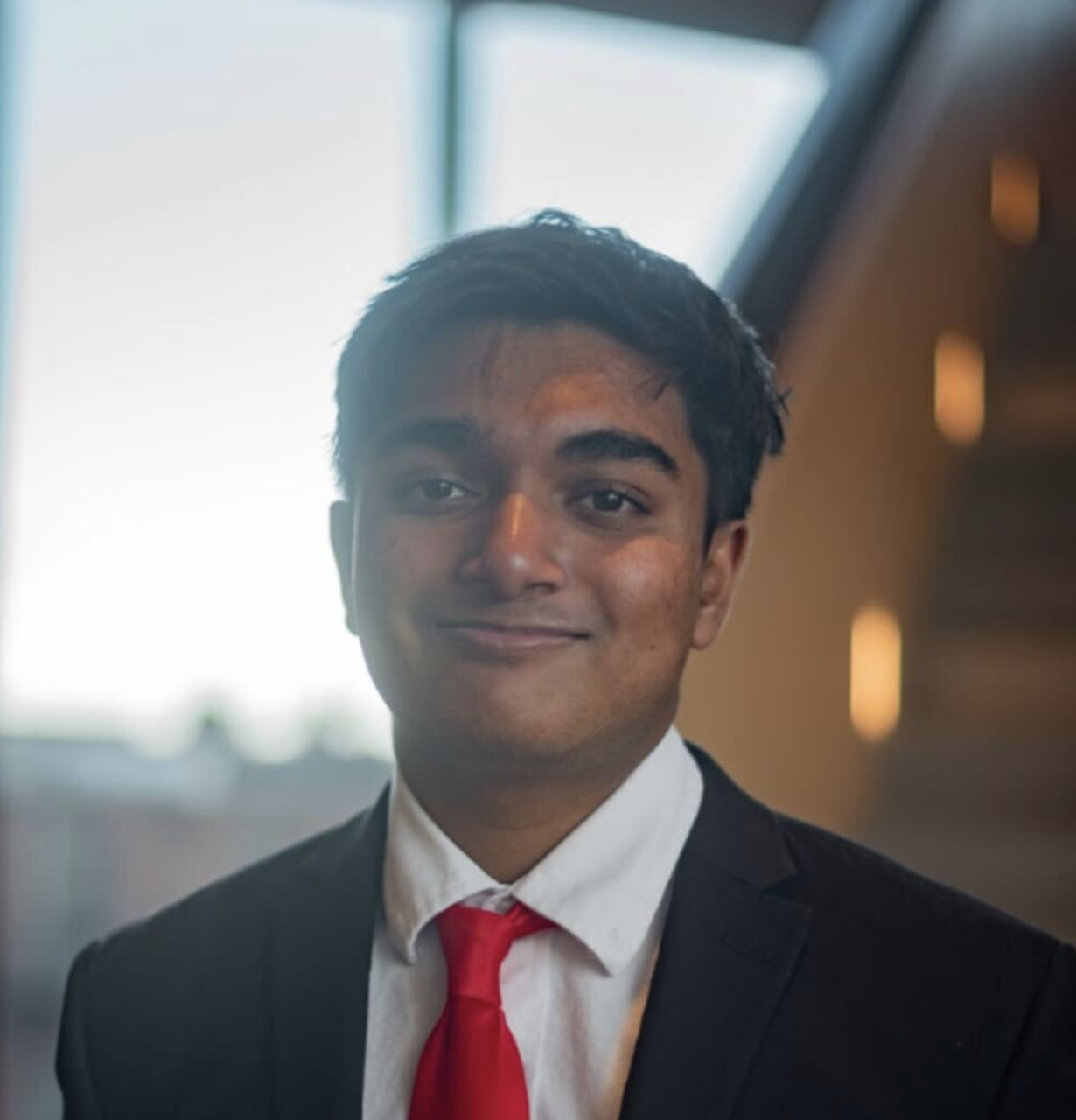
Nikhil Maharaj - Chair
Nikhil Maharaj is a sophomore at Boston University, double majoring in Economics and International Relations. An international student who has lived in five different countries, he currently resides in Ireland, just outside of Dublin.
Nikhil is a dedicated member of the Model UN travel team at BU, having been involved in MUN since the eighth grade. He is passionate about the activity and looks forward to chairing the Singapore Urban Planning Committee.
He has visited Singapore numerous times and considers it one of the most incredible countries globally, even considering studying abroad there next year. He has extensively read the books of Prime Minister Lee Kuan Yew, whom he considers one of his favorite leaders.
Nikhil hopes this committee allows delegates to meet new people, challenge their perspectives, and learn about Singapore's underrated history. He encourages delegates to ask him or any dais member for help and looks forward to an exciting debate on this interesting topic.
Contact: maharajn@bu.edu

Jasper Barkett-Greenberg - Vice Chair
Jasper Barkett-Greenberg is a freshman at Boston University’s Pardee School of Global Studies, where he is currently pursuing a major in International Relations. Originally from Wellington, the capital of New Zealand, Jasper brings a unique global perspective to the committee. His background in international diplomacy is extensive; he participated in Model UN during high school and had the distinct honor of representing New Zealand at the Children’s General Assembly in Denmark for two consecutive years.
Outside of his academic and diplomatic interests, Jasper is a lover of travel, skiing, and music, particularly playing the saxophone. He is also a dedicated fan of Formula One. Jasper views Model UN as a premier platform for students to challenge themselves and build lasting connections with like-minded peers. Whether this is a delegate's first conference or their fourth, Jasper is eager to support them throughout the weekend. He is looking forward to the innovative solutions delegates will propose for Singapore’s future and encourages anyone with questions to reach out to him via email.
Contact: jasperbg@bu.edu